
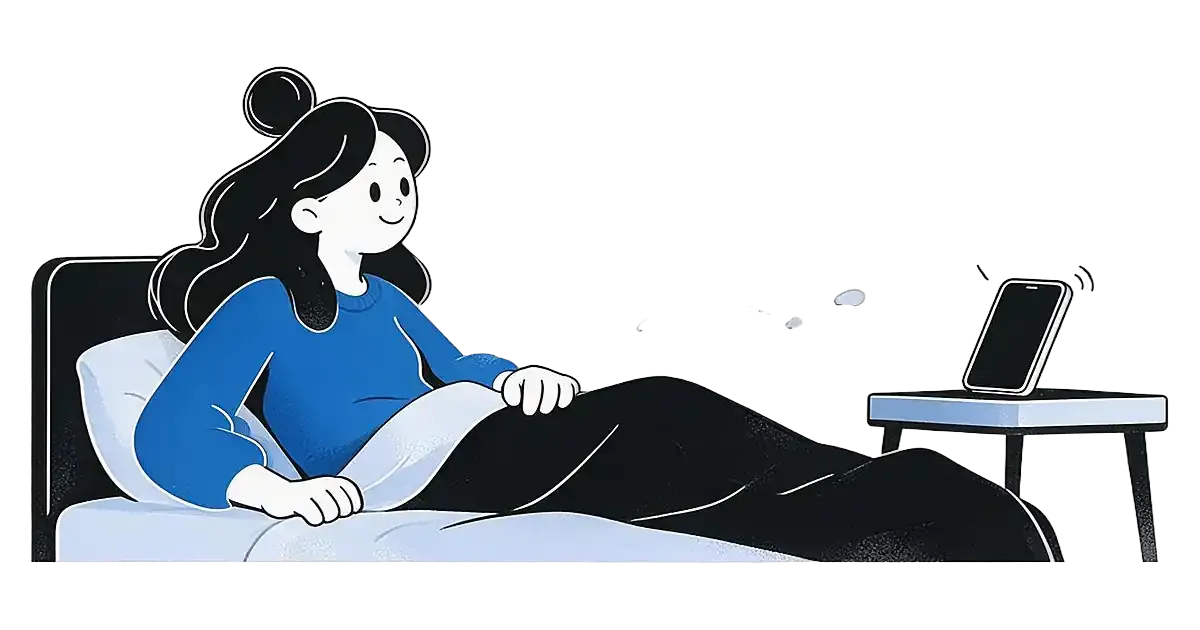
Why do I fall back asleep after I turn off my alarm?
Three things usually combine.
- You are still groggy. NIOSH describes reduced alertness and performance right after waking as sleep inertia, and that is exactly when you reach for the screen. Our sleep inertia glossary entry explains how long it can last.
- The bed is warm, dark and right there, so lying back down costs no effort.
- Switching the alarm off can become a half-asleep reflex. Many people remember the alarm ringing but not stopping it.
Notice that none of this is about the alarm being too quiet. If you do not hear it at all, that is a different problem, and why you sleep through your alarm covers it. This guide is for the case where you did wake, did stop the alarm, and still ended up asleep.
What should I do in the first minute after the alarm?
Do one small, physical action that you chose the night before. Deciding in advance matters because a half-awake brain is poor at planning and very good at negotiating. If the plan already exists, you only have to follow it.
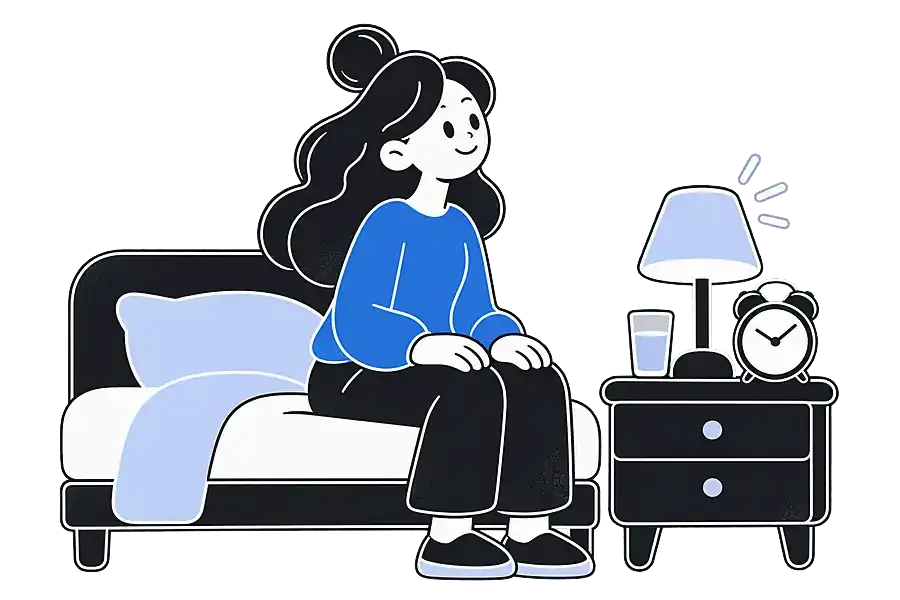
Good first actions share three traits. They happen away from the pillow, they take under a minute, and they lead naturally into your routine:
- Sit on the edge of the bed and put your feet on the floor.
- Walk to the bathroom and splash water on your face, if that is safe and easy for you.
- Open the curtains or switch on a lamp so light reaches your eyes.
- Drink a glass of water you left within reach.
Pick one, write it on a note by the bed if that helps, and use it every morning for a week. Repeating the same sequence turns it into a habit, and a habit needs less thought than a decision. If the first week feels clumsy, shrink the action rather than dropping it. Putting your feet on the floor is a perfectly good start, and you can add the lamp or the water later. Make the evening setup part of the plan too: lay out the glass, the glasses and anything you need, so the morning asks nothing of you but the first move. Our guide to waking yourself up when you are tired has more ideas for the first ten minutes.
Does putting my phone across the room work?
It can help, because it adds a step between you and the off button. You have to sit up, stand and walk, and that movement is often enough to break the pull of the pillow. But it is not a guarantee. Plenty of people walk over, stop the alarm and walk straight back to bed, so the phone distance only works when the first action above is waiting at the end of the walk.
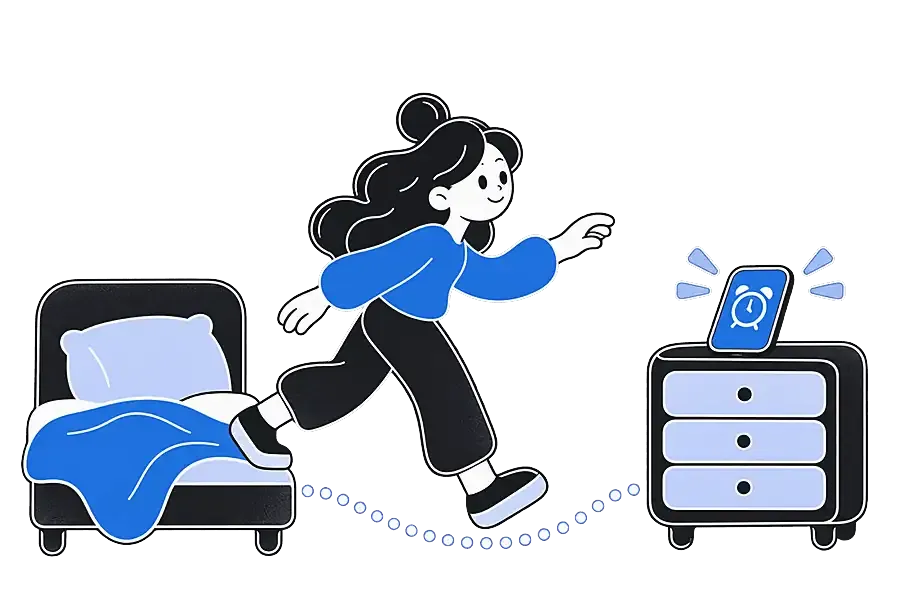
- Place the phone just out of arm's reach on a stable surface.
- Check that you can still hear it clearly from bed.
- Keep the route clear, and arrange charging cables so they do not cross your path in the dark.
Our guide on where to put your phone at night goes through safe options in more detail.
Across the room is not right for everyone. If you have balance problems, limited mobility or need to keep your phone close in case someone needs to reach you, keep it within reach and choose a seated first action instead, such as sitting up and putting on your glasses. A reachable lamp or a vibrating alarm may suit you better than distance.
Should I set a second alarm or a follow-up sound?
Often, yes. If the first alarm only half wakes you, a second sound a few minutes later catches the slide back into sleep. The key is that it should not be a copy of the first. A tone you have just dismissed is easy to dismiss again, and the brain learns to tune out a sound it hears every day. Our habituation glossary entry describes that effect.
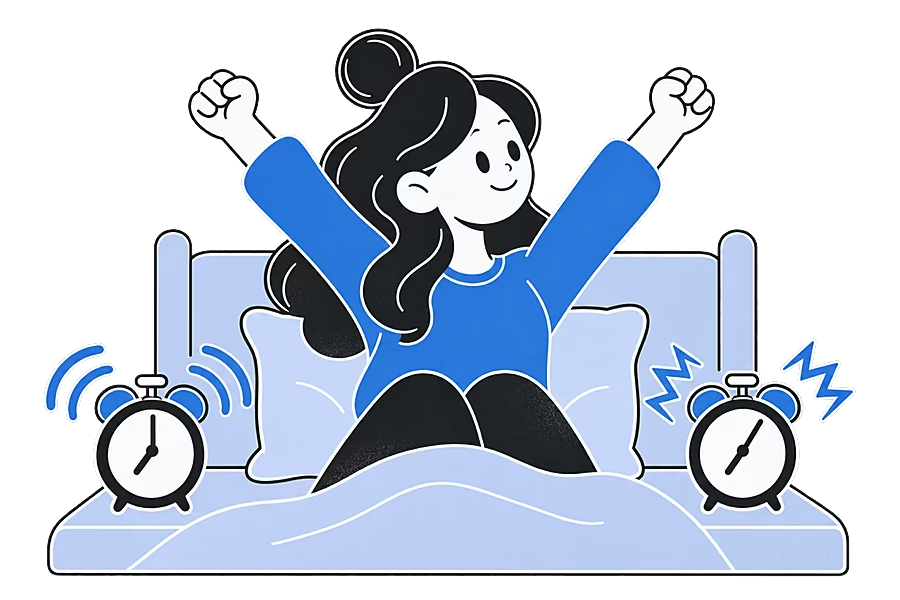
This is where AlarmiFex fits. It is a sound-first alarm app: you can pick from 34 sounds sorted into Calm, Energetic, Motivational, Classic and Anime, or import your own audio or video clip and trim it. Wake-up Series lets you choose a time window and at least two different sounds, which then play across that window. So a soft sound can start the morning and a livelier one can follow a few minutes later, without you creating several separate alarms. You can also set the usual snooze, which defaults to 9 minutes, though pressing it is the very habit this guide is trying to avoid.
To be clear about what it does not do: AlarmiFex has no puzzle, photo or maths challenge to dismiss an alarm, and it cannot check that you are awake. It gives you a fresh sound at the right time and leaves the getting up to you. If you want to compare approaches, our alarm alternatives guide sets out the differences. AlarmiFex is a free download.
Do task alarms that make you solve something actually help?
Some apps ask for a puzzle, a photo or a scan before the alarm will stop. For some people this works, because the task forces a few seconds of real thinking. For others it becomes one more thing to do half asleep, and they learn the answer by heart or find a way around it. There is no reliable evidence that a harder task makes you more awake, so judge one by fit rather than difficulty.
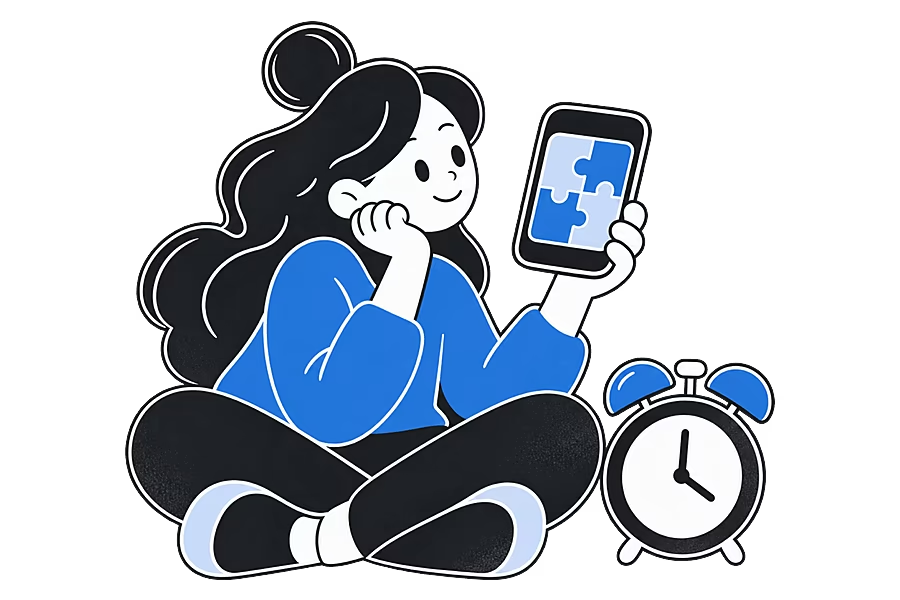
Before relying on a task alarm, test the whole dismissal flow while awake. Ask yourself:
- Can I complete it with my glasses off or in low light?
- Is there a clear way to stop the alarm if I feel unwell?
- Will it disturb a partner while I complete the task?
- Does it need a paid plan, an internet connection or extra permissions?
If the answers are comfortable, it may suit you. If not, the combination of a first action, a follow-up sound and a sensible phone spot gets most of the benefit with fewer moving parts.
Could the real problem be too little sleep?
Sometimes it is. Falling straight back asleep can mean your body still needs the sleep it did not get. NHLBI recommends giving yourself enough time for sleep and keeping regular sleep and wake times. If a very early wake time regularly cuts your sleep short, no alarm trick will fully make up for it. Moving bedtime earlier by even fifteen minutes, keeping the same wake time at weekends and winding down away from bright screens are gentler fixes than a louder alarm. The NHS has practical advice on falling asleep faster and sleeping better.
Also check your snooze habit. Pressing snooze repeatedly gives you broken, light sleep rather than useful rest. Our snooze glossary entry explains the trade-off, and one good alarm plus a follow-up sound is usually better than five snoozes.
When should I speak to a doctor?
If you cannot stay awake during the day even though you make time for enough sleep, or you fall asleep at moments when it is risky, such as while driving, get advice. The NHS lists persistent daytime sleepiness as something to raise with a GP, because conditions such as sleep apnoea and other sleep disorders can cause it and are treatable. An alarm cannot fix those.
Until then, keep the plan simple. Tonight, choose your first action, set one follow-up sound a few minutes after the main alarm, and place the phone where you can hear it but must get up to reach it. Tomorrow, note whether the difficulty was hearing, stopping or staying up, and change only that one thing. If the main trouble is the sound itself, the heavy sleepers plan covers sound choice and spacing. If you want more on this, see Is Alarmy free?, which explains what the free plan covers and what Premium adds.
Quick answers
You are usually still in sleep inertia when you stop the alarm, so your alertness is low and the bed is right there. With no pre-decided next step, lying back down is the easy option. A planned first action and a follow-up sound make it harder.
Choose one short action the night before, such as sitting up, putting your feet on the floor and switching on a light. Add a second, different sound a few minutes later and keep the phone out of arm's reach if that is safe for you.
It helps by adding a step, but it does not guarantee you stay up. It works best when a first action waits at the end of the walk. If you have balance or mobility problems, keep it reachable and use a seated first action.
No. AlarmiFex has no dismiss tasks. It focuses on the sound: 34 sounds by mood, your own imported clips, and Wake-up Series, which plays at least two different sounds across a window you choose.
If you stay very sleepy during the day despite enough time in bed, or you fall asleep at risky moments such as while driving, see a doctor. Persistent daytime sleepiness can have treatable causes.
Make tomorrow morning sound like you
Pick a sound for your mood or import your own. AlarmiFex is free to download on the App Store and Google Play.


Related reading
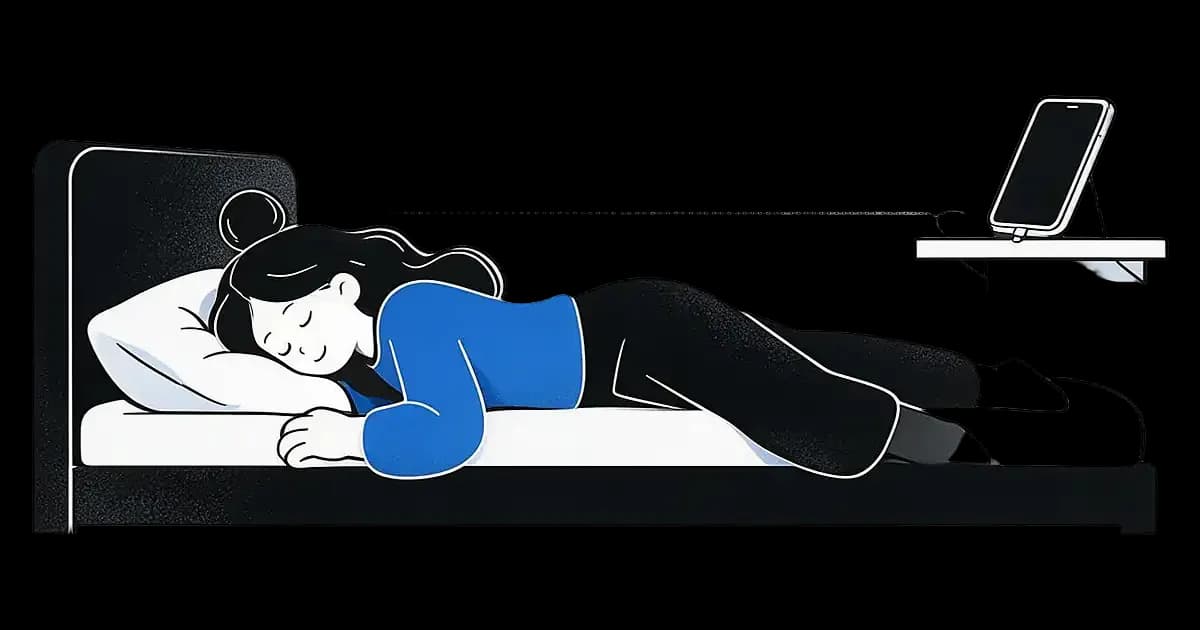
Where to Put Your Phone at Night When You Use It as an Alarm
Where your phone sits at night changes whether you hear the alarm, reach it safely and stay off the screen. Here is how to choose a spot and test it.
Read more →
How to Wake Up to Your Alarm (When You Keep Sleeping Through It)
If you keep sleeping through your alarm, first check that it rings, then make the sound easier to notice and plan your first move out of bed.
Read more →
A progressive alarm clock app for iPhone: Wake-up Series
Save one Wake-up Series and AlarmiFex plays several different sounds across a time window, one alarm per sound, for a gentler and harder-to-ignore morning.
Read more →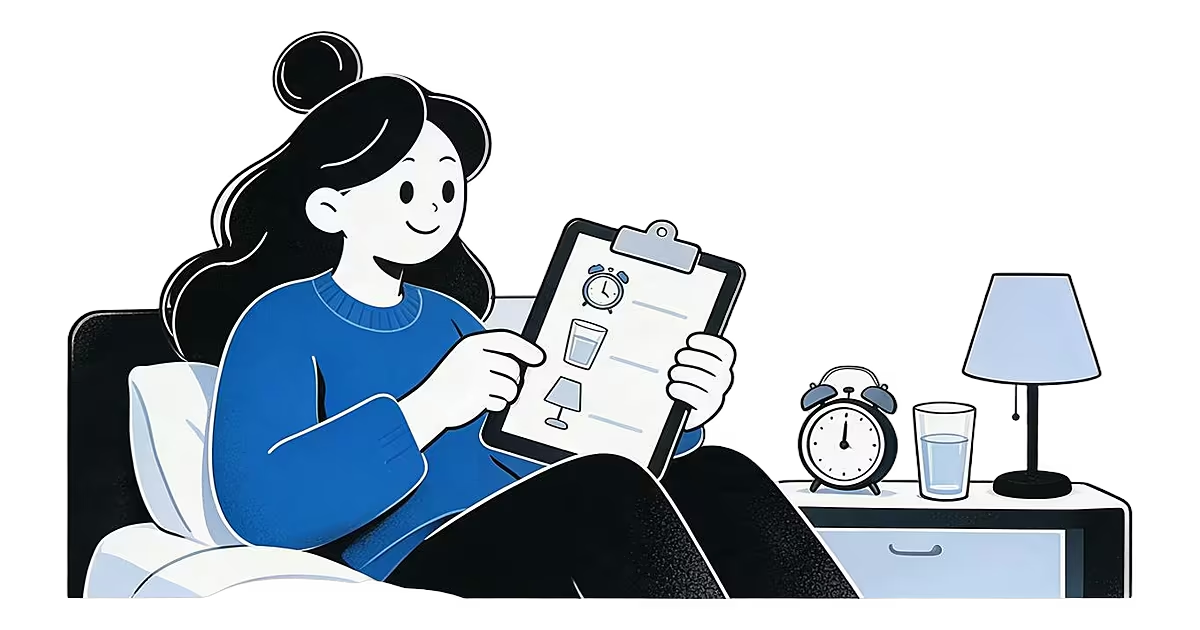
An alarm clock for heavy sleepers: a practical plan
A practical plan for heavy sleepers: pick a sound you notice, rotate it, use a Wake-up Series, place your phone well and test your setup.
Read more →
How to wake yourself up when you're tired
Get light and movement first, give grogginess time to pass, and fix the sleep habits behind it. Here is what to do, with sources.
Read more →
Is Alarmy free? What you get and what you pay for
Alarmy is free to download with in-app purchases. Here is what the free plan covers, what Premium adds, and how to avoid a surprise charge.
Read more →