
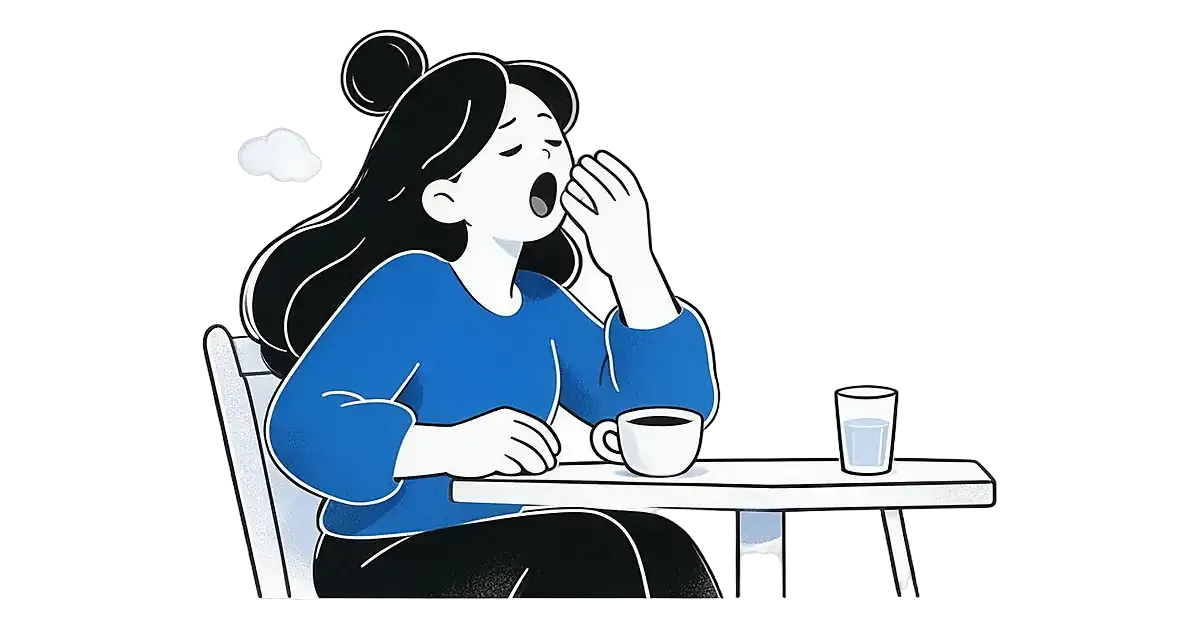
To wake yourself up when you are tired, get light and movement first: sit up, open the curtains or step outside, drink some water, and move for a few minutes. Give the grogginess time to pass, because it usually fades on its own within about half an hour. If you are tired every morning, the fix is more about sleep than about tricks, so this guide covers both the quick wake-up and the longer-term causes.
What should you do in the first minutes after the alarm?
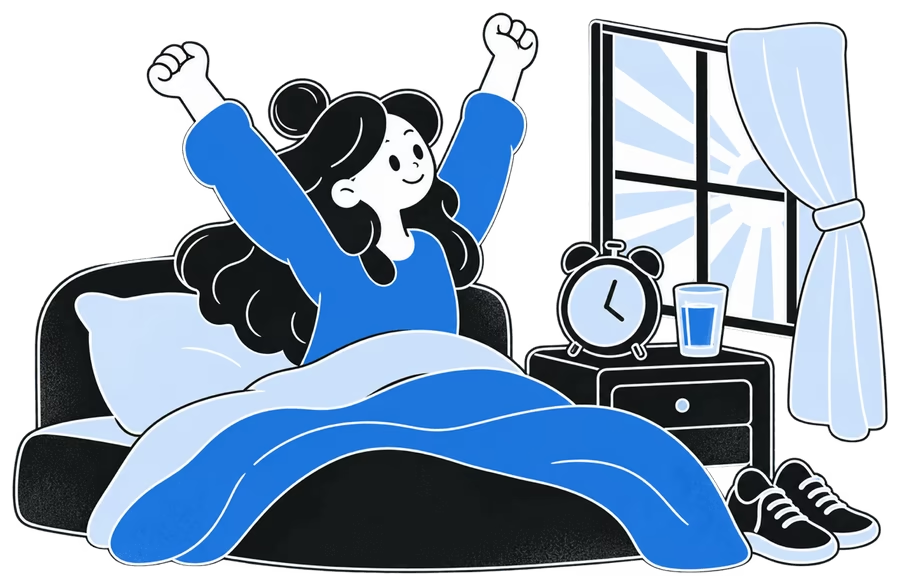
Start with the things that cost nothing and work with your body rather than against it. Here is a simple order to follow from the moment the alarm sounds:
- Get up when the alarm rings. Every snooze is another few minutes of light, broken sleep, and it gives the grogginess longer to settle in.
- Turn on bright light. Open the curtains, switch on the room lights, or step outside. Light is the strongest signal your body clock uses to tell day from night.
- Drink a glass of water. It is a small, easy habit that gives you something to do on your feet.
- Move for a few minutes. Walk to the kitchen, stretch, or climb a flight of stairs. You do not need a workout.
- Eat something light. Eat something light if you like, or whatever suits you.
None of these is a cure for a bad night. They simply help your body shift from sleep to wakefulness. If the tiredness stays all day, skip ahead to the section on when it is more than a rough morning.
Why do you feel so groggy right after waking up?
That heavy, foggy feeling has a name: sleep inertia. A review of the research in Sleep inertia: current insights describes it as a state of reduced physical and mental drive after waking. It typically lasts less than 30 minutes, although in some people symptoms can last for several hours.
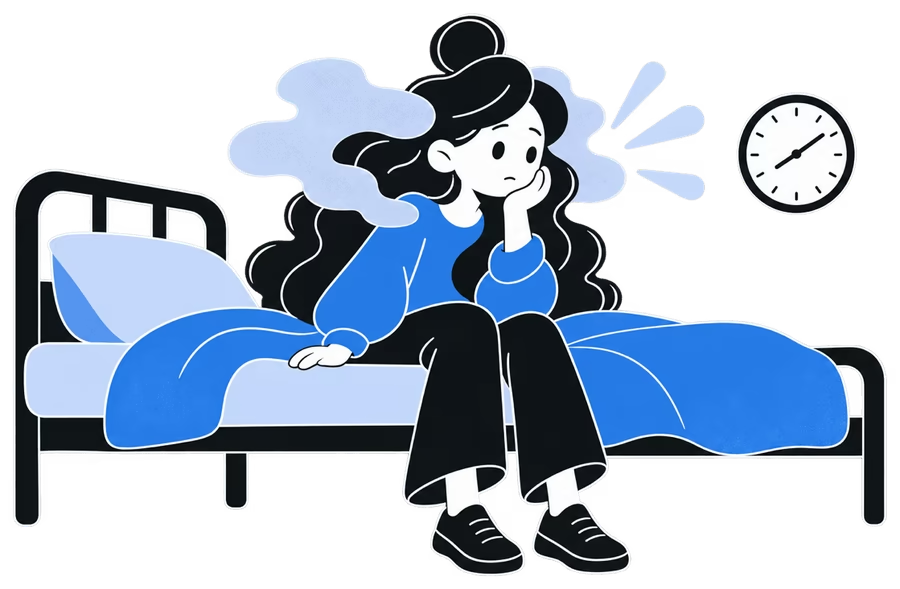
Two practical points follow from that.
- Do not judge your day by the first ten minutes. You may feel worse right after waking than you will at breakfast, and that is normal.
- Avoid anything risky or important during that window if you can. Driving, tricky decisions, and sharp emails can wait until your head clears.
Cutting your sleep short can make a groggy start feel worse, so a short night often leaves you dazed. If you also struggle to hear your alarm at all, our guide to why you sleep through your alarm covers that side of the problem.
Does light, water or movement really help?
They are low-risk habits, so they are worth trying, but it helps to be honest about how strong the evidence is for each.
Light
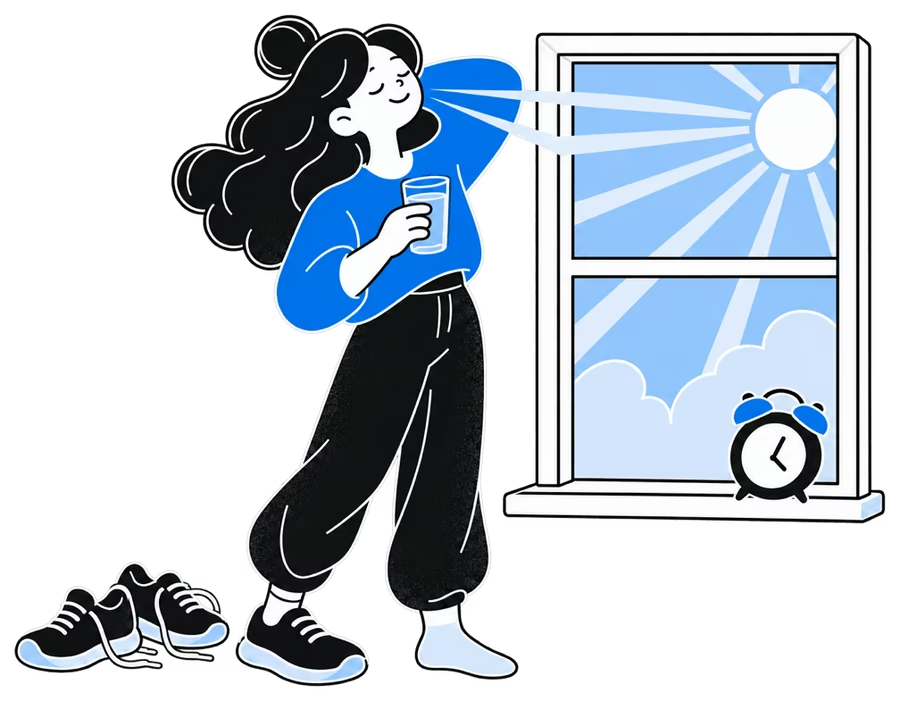
The US National Institute of General Medical Sciences says that light and dark have the biggest influence on circadian rhythms, the body clock that sets when you feel sleepy and alert. Its circadian rhythms fact sheet explains that the brain adjusts melatonin, the hormone that makes you sleepy, based on how much light your eyes receive. So morning light is a sensible cue to send. The sleep inertia review above notes that bright light is known to improve daytime alertness but that its effect on grogginess specifically is not yet well established. Treat it as a good habit, not a guaranteed fix.
Water and food
A glass of water and a normal breakfast are fine habits, but we are not aware of strong evidence that they cure morning tiredness. Do them because they are good for you, and do not expect a jolt.
Movement
Getting on your feet breaks the lying-down, eyes-half-shut loop. A short walk or some stretching is enough. If you want a stronger push to leave the bed, read how to find an alarm that gets you out of bed.
Should you use caffeine or a nap?
Both can help, and both can backfire.
Caffeine. The US Food and Drug Administration says 400 milligrams a day is an amount not generally associated with negative effects for most healthy adults, and that people differ in how sensitive they are. Its guide, Spilling the Beans: How Much Caffeine Is Too Much?, lists insomnia and sleep disruption among the signs of having too much. The National Heart, Lung, and Blood Institute adds that the effects of caffeine can last up to 8 hours, so an afternoon coffee can make it harder to fall asleep that night. That sets up a cycle: poor sleep, more coffee, poorer sleep. Keep caffeine to the morning and early day.
Naps. The same NHLBI page, healthy sleep habits, says naps can boost alertness but advises keeping them short, no more than 20 minutes for adults, and earlier in the afternoon if night sleep is hard. A long nap late in the day can steal from tonight.
A short nap helps a tired afternoon. It does not repay a week of five-hour nights.
What can you do tonight so tomorrow is easier?
The most reliable way to wake up less tired is to sleep better. The NHS suggests sticking to the same sleep times and aiming for 6 to 9 hours of sleep, and the NHLBI makes the same point about going to bed and waking up at about the same time every day. A few habits that follow from those sources:
- Keep a steady schedule, including weekends, within about an hour if you can.
- Dim the lights in the evening and keep the bedroom dark and not too warm or noisy.
- Put screens away in the hour before sleep. The NHS and NHLBI both advise this, and NIGMS notes that light from electronic devices at night can confuse biological clocks.
- Skip caffeine, big meals and hard exercise in the couple of hours before bed.
- Limit alcohol, which the NHS lists among the things to avoid.
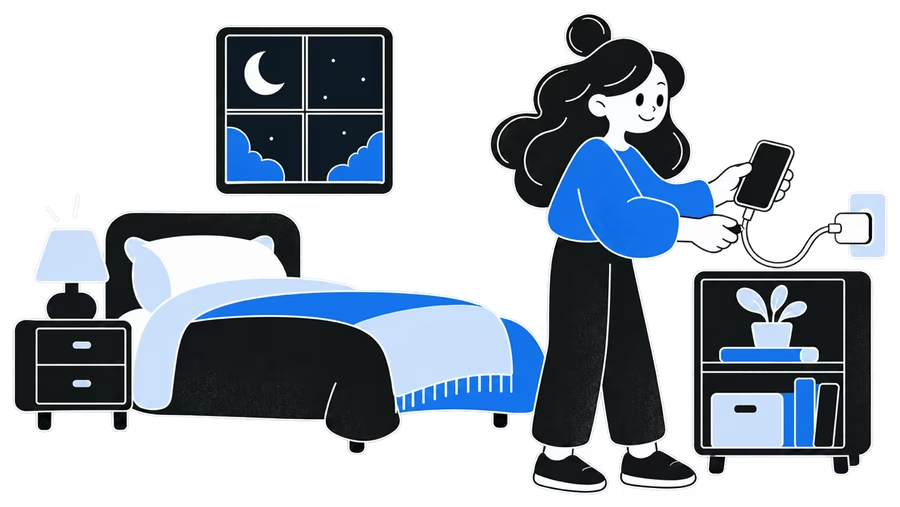
- Charge the phone out of arm's reach, so you must stand to switch the alarm off. See where to put your phone at night.
Can your alarm make waking up easier?
It can help you notice the alarm and get moving, even though it cannot fix a lack of sleep. Start with the built-in way. On an iPhone, open the Clock app, go to the Alarms tab, tap the plus button, and pick a time, a repeat schedule, a label and a sound. Apple walks through each step in how to set and change alarms on your iPhone. On Android, Google explains how to set, cancel, or snooze alarms in its Android Help guide. Choose a tone you can clearly hear, and switch snooze off if you tend to use it as a habit.
If the stock sounds have become background noise, a different sound is one honest option. AlarmiFex is an alarm app for iPhone and Android with 34 sounds in five moods: Calm, Energetic, Motivational, Classic, and Anime. You hear a preview before you choose. If you struggle with a sluggish start, an energetic sound may feel more like a nudge than a shock, but that depends on you, so listen and decide.
You can also bring your own: import an audio or video file, or a voice memo you saved on your phone, and trim it to the part you want with custom alarm sounds. AlarmiFex does not record inside the app, so record the memo first, then import it. For mornings that need more than one nudge, the Wake-up Series plays a few different sounds across a time window you set, so one sound does not have to do all the work. On iPhone, AlarmiFex uses Apple AlarmKit, so alarms ring with the app closed, on silent and in Focus once you allow alarms. That is an iPhone feature, and you should still test your setup before relying on it.
When is being tired more than a rough morning?
Everyone has groggy days. But if you cannot wake up even after a full night, or the tiredness hangs around all day, it is worth asking a clinician. This article is general information, not medical advice, and it cannot tell you why you feel the way you do.
The NHS page on tiredness and fatigue suggests seeing a GP if you have felt tired for a few weeks and are not sure why, if your tiredness affects daily life, if you feel tired and have other symptoms such as weight loss or mood changes, or if you have been told you make gasping, snorting or choking noises while asleep. In the US the same idea applies: speak to your doctor if the pattern is persistent or worrying. The NHLBI's overview of sleep deprivation is a good place to start reading about how too little sleep affects the body.
If you are waking tired for work or school and the real issue is a late bedtime, our guide on how not to oversleep for work and the page on morning motivation may help. If you are a very deep sleeper, see how to wake up a heavy sleeper. If you want more on this, see our ADHD morning routine guide, which pairs labeled alarms with a short step list. If you want more on this, see how to wake up early and keep doing it, which shifts your wake time 15 minutes at a time. If you want more on this, see sunrise alarm vs sound alarm, which looks at how each wakes you and how to use light and sound together. If you want more on this, see a calm morning routine that starts with your alarm, which sets the alarm up the night before.
Quick answers
Get up when the alarm rings, switch on bright light or step outside, drink some water and move for a few minutes. Grogginess from sleep inertia typically passes in under 30 minutes. If you are tired every day, look at sleep habits and ask a clinician.
A research review describes sleep inertia as typically lasting less than 30 minutes, though some people have symptoms for several hours. It is usually worse after a short night.
For most healthy adults the FDA cites 400 mg of caffeine a day as an amount not generally associated with negative effects, but sensitivity varies. The NHLBI notes caffeine can last up to 8 hours, so keep it to the morning to protect tonight's sleep.
The NHLBI advises adults to nap no more than 20 minutes, and earlier in the afternoon if night sleep is hard. A long late nap can make it harder to fall asleep.
It can help you notice the alarm and get moving, but it cannot replace sleep or guarantee that you wake. Try the built-in alarm first. AlarmiFex is one option with mood sounds, your own imported clips and Wake-up Series. Free to download. Premium sounds and custom sounds need a subscription. See current pricing and terms in the app.
Wake up to a sound you will actually hear
Preview AlarmiFex sounds by mood, or import your own clip. AlarmiFex is free to download on iPhone and Android.


Related reading
How to Wake Up to Your Alarm (When You Keep Sleeping Through It)
If you keep sleeping through your alarm, first check that it rings, then make the sound easier to notice and plan your first move out of bed.
Read more →
How to Not Oversleep for Work: A Practical Morning Plan
Plan your wake time backwards from your start time, check the alarm the night before, add a backup that fails differently, and decide your first action out of bed.
Read more →
Turned Off the Alarm and Fell Back Asleep? How to Stop It
Why you fall back asleep after switching the alarm off, and a plan to stop it: one pre-decided action, a follow-up sound and a safe phone spot.
Read more →
How to Wake Someone Up Who Sleeps Through Alarms
A practical plan for waking a heavy sleeper: enough sleep, an alarm checked from the pillow, considerate options for shared rooms and one easy first action.
Read more →
What Is Sleep Inertia? The Groggy Feeling After Waking
Sleep inertia is the groggy, slowed-down state just after you wake up. What it is, why it happens and what helps.
Read more →
ADHD morning routine: alarms that help
A short, repeatable routine plus several labeled alarms can make ADHD mornings easier. Here is how to set them up on your phone, and where an app can help.
Read more →